
A collaboration between Swansea University and Y Ty Celf led to the successful project application to the Arts Council of Wales Arts, Health and Wellbeing Fund, enabling the delivery of Creating Nostalgic Moments, a year-long programme running from April 2025 to April 2026.
With Swansea University’s Dr Gary Christopher as the academic lead, providing knowledge and expertise on the role of nostalgia in memory and cognition in later life, as well as Y Tŷ Celf (The Art House Ltd CIC in Llanelli) at the helm, the project was delivered in partnership with:
- Swansea University
- Links Mental Health Charity
- MIND Llanelli
- Ysgol Y Strade

The programme explored how emotionally meaningful memories connected to identity, relationships, and belonging could be used within arts workshops to improve wellbeing.
Drawing on research developed with Swansea University, sessions used:
- music and sound
- photographs and projected images
- cultural heritage themes
- storytelling
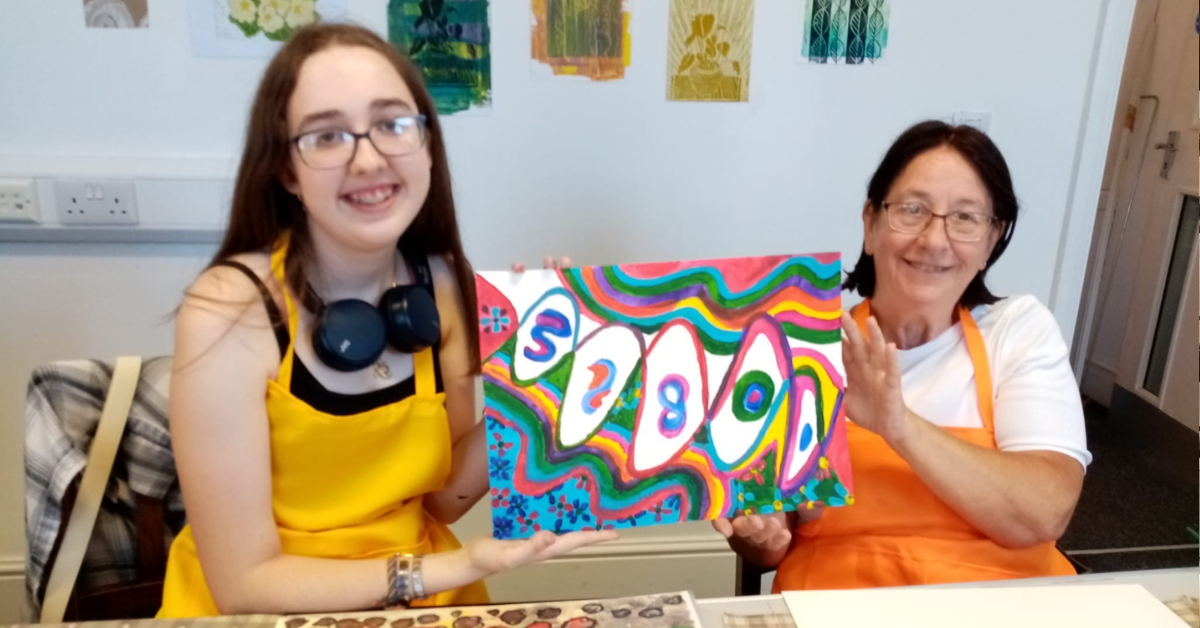
- memory-making creative activities such as textiles, collage, ceramics, books, mosaics and painting
The project also connected strongly with the Welsh concept of hiraeth, helping participants reflect on home, memory, place, and belonging.
This work had significant positive outcomes, especially for older adults living with dementia and adults accessing mental health support. Participants reports stronger social connections, improved confidence and reduced isolation, and the programme delivered:
- 189 workshops
- 584+ attendees
- 150+ participants
- 13 freelance artists engaged
- 5 support staff and volunteers
- 6+ intergenerational sessions
- 2 public exhibitions
- 1 documentary film

Karen Thomas from Y Ty Celf expressed her appreciation for the partnership, stating, “The collaboration with Swansea University has been invaluable. The expertise and support we’ve received have significantly strengthened our project.”
Zoe Coombes from Swansea University echoed this sentiment, saying, “Working with Y Ty Celf has been a rewarding experience. The opportunity to contribute to such an important cause has been fantastic, and I look forward to working together on future projects.”
This partnership exemplifies the power of cross-sector collaboration in fostering meaningful projects that support vulnerable populations. By bringing together academic expertise with community-driven initiatives within NISH, this project is making strides in enhancing the use of art as a tool for memory preservation and wellbeing.

