
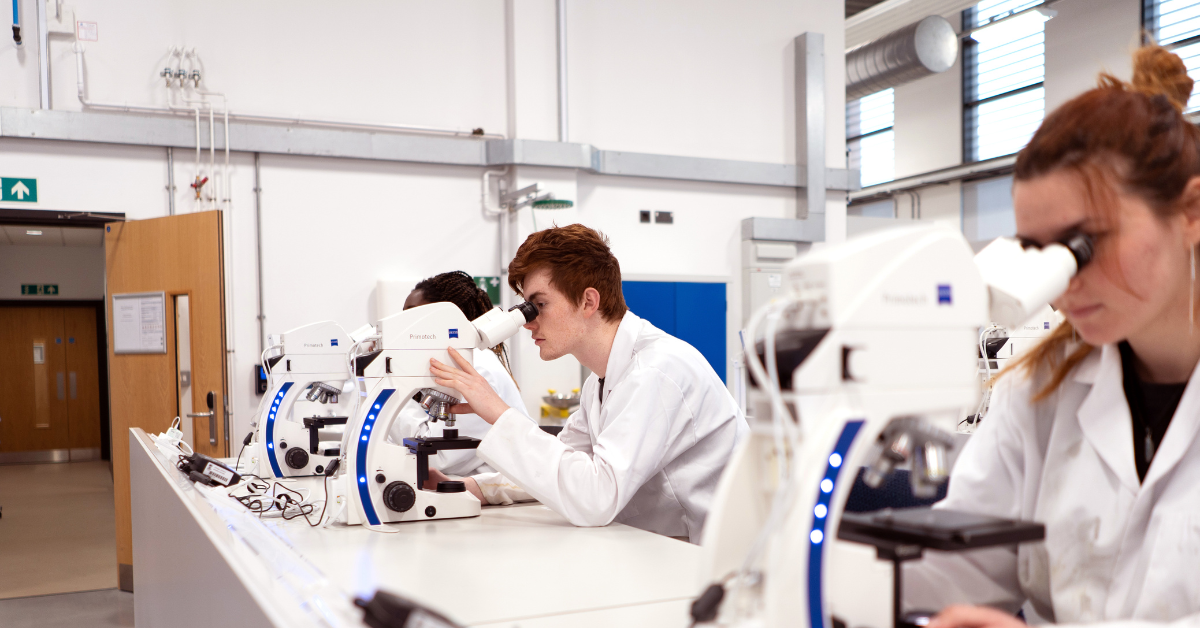
Dr Owain Howell and his team at Swansea University are using stem cell-derived neurons and gene analysis to explore new ways of protecting brain cells from degeneration in multiple sclerosis (MS), aiming to develop therapies that directly target neuron survival.
MS is a life-altering neurological condition that affects over 130,000 people in the UK and 2.8 million globally. It disrupts communication between the brain and the body, primarily due to immune system attacks that damage the protective covering of nerves. But while most treatments focus on modulating the immune response and reducing inflammation, a critical part of the disease remains under-addressed: neuron loss.
At Swansea University, Dr Lauren Griffiths (Postdoctoral Researcher) and Dr Owain Howell (Associate Professor) are leading an innovative project that shifts focus toward protecting neurons from degeneration. Thanks to support from the Medical Research Council’s Impact Acceleration Account, the team is exploring the genetic mechanisms that support neuron survival and identifying potential therapeutic targets for future treatment development.
Current MS therapies do an important job in managing inflammation and controlling immune responses. However, they do not directly address the degeneration of neurons, which is what often leads to long-term disability in people living with MS. The mechanisms that promote how neurons survive are really important. If they can be preserved, good quality of life for patients could be improved or extended.
The research team is using stem cell-derived neurons to study how specific genes – previously linked to MS through genetic analysis – may play a role in the brain. They have identified genes that could be significant, but it is not yet fully understood what they do or how they affect neurons in MS.
By examining the expression levels of these genes, observing their relationships to neuron morphology, and understanding their connection to broader disease progression, the team hopes to uncover new insights into why neurons die and how to prevent it. Their lab-based stem cell model gives them a unique window into how these genes behave in a controlled environment, offering clues that can’t be easily observed in living patients.
This approach helps close a major knowledge gap in MS research: the mechanisms of neurodegeneration. Most current therapies manage symptoms or slow immune attack but don’t address the actual loss of nerve cells that causes so much of the long-term damage in MS.
With the new funding, this research is laying the foundation for a new stream of investigation at Swansea University. The team’s goal is to generate enough data to apply for larger-scale research grants that will help take their findings from the lab toward potential clinical application.
As awareness of MS grows and healthcare professionals become better at recognising and diagnosing it, the need for treatments that protect brain health directly will only increase. This project is an important step in that direction.
We’re proud to support projects like this, where early-stage funding helps turn new ideas into promising research that could transform patient care.