
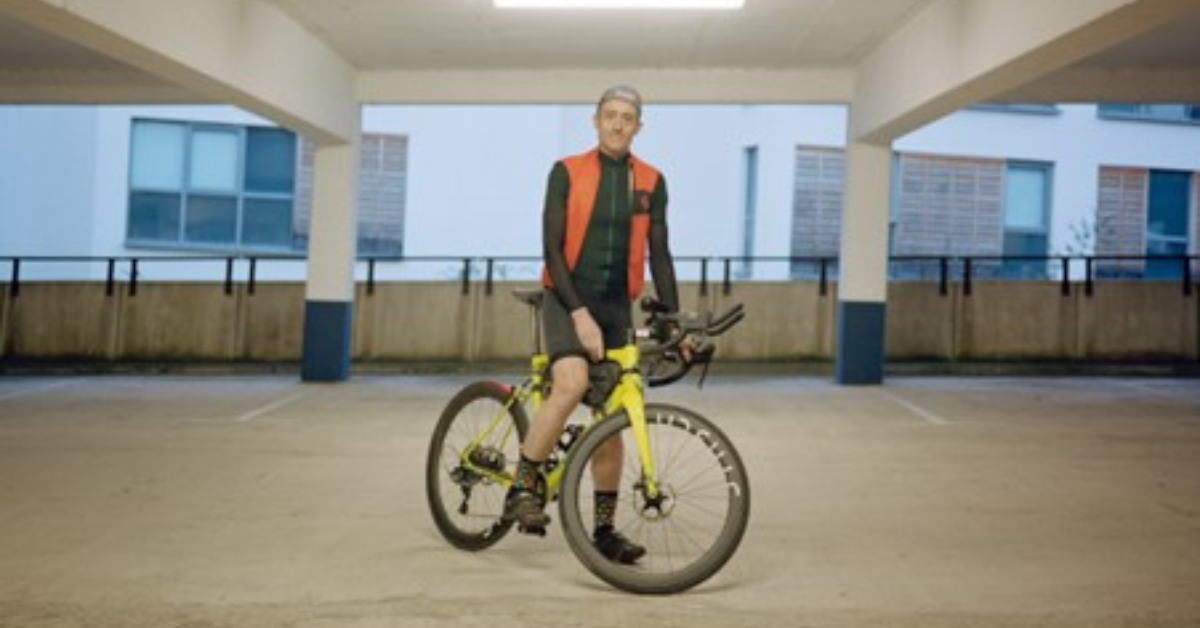
Balancing academic leadership with elite endurance sport is no small feat. For Ian Walker, Head of the School of Psychology at Swansea University, it became the foundation for achieving something extraordinary: a Guinness World Record.
Having worked at Swansea University for just over three years, Ian brings not only academic expertise to his role, but also a remarkable story of determination, late-blooming athletic success, and mental resilience.
Ian’s journey into ultradistance cycling didn’t started seriously in 2015. And unlike many elite athletes, his breakthrough came later than expected. In his mid-40s, he entered a pan-European bike race for the experience alone. The result surprised him – he had performed far better than anticipated, which sparked a shift in mindset. The following year, he won another cross-Europe race, and with growing confidence, set his sights on something even bigger… a world record attempt.
In 2019, Ian achieved his most notable sporting accomplishment: setting the Guinness World Record for fastest cycle across Europe (North Cape to Tarifa). Covering the vast distance from the northernmost point of Europe to its southern edge, he completed the journey in 16 days, 20 hours, and 59 minutes (21 June – 8 July 2019), cutting more than two days off the previous record.
What makes the achievement even more remarkable is that he managed navigation, logistics, and endurance solo, and he used the challenge to raise money and awareness for the charity Roadpeace.
One of the most striking aspects of Ian’s preparation is how he integrated training into daily life. Rather than relying solely on dedicated sessions, he turned his commute into a powerful training tool. Cycling to work most days meant completing an 80-kilometre round trip, often over hilly terrain. This consistent base mileage formed the backbone of his endurance, which he supplemented with longer rides at weekends.
It’s a simple but powerful example of how high performance can be built into routine, even alongside a demanding full-time role.

As a psychologist, Ian brings a unique perspective to performance under pressure. During extreme endurance events, mental strategy becomes critical. For Ian, one of the most effective techniques was maintaining a strict focus on the present moment.
Rather than being overwhelmed by the enormity of crossing a continent, he concentrated only on what was immediately ahead, never allowing himself to dwell on the full scale of the challenge.
These insights later formed the basis of his book, Endless Perfect Circles, where he explores the psychological side of ultradistance cycling in depth.
Ian offers a refreshing perspective for those trying to balance elite sport with a full-time job. His key message? It’s more achievable than you think.
“It doesn’t hurt to remember that for anything athletic, it’s the recovery where the gains are made.”
In endurance sport, the often-overlooked role of recovery supports progress. Work doesn’t need to compete with training, it can serve as an enforced recovery time. This mindset shift can make balancing both worlds feel far more sustainable.
While Ian no longer competes at an elite level, sport remains an important part of his life. He continues to run and cycle, but purely for enjoyment.