
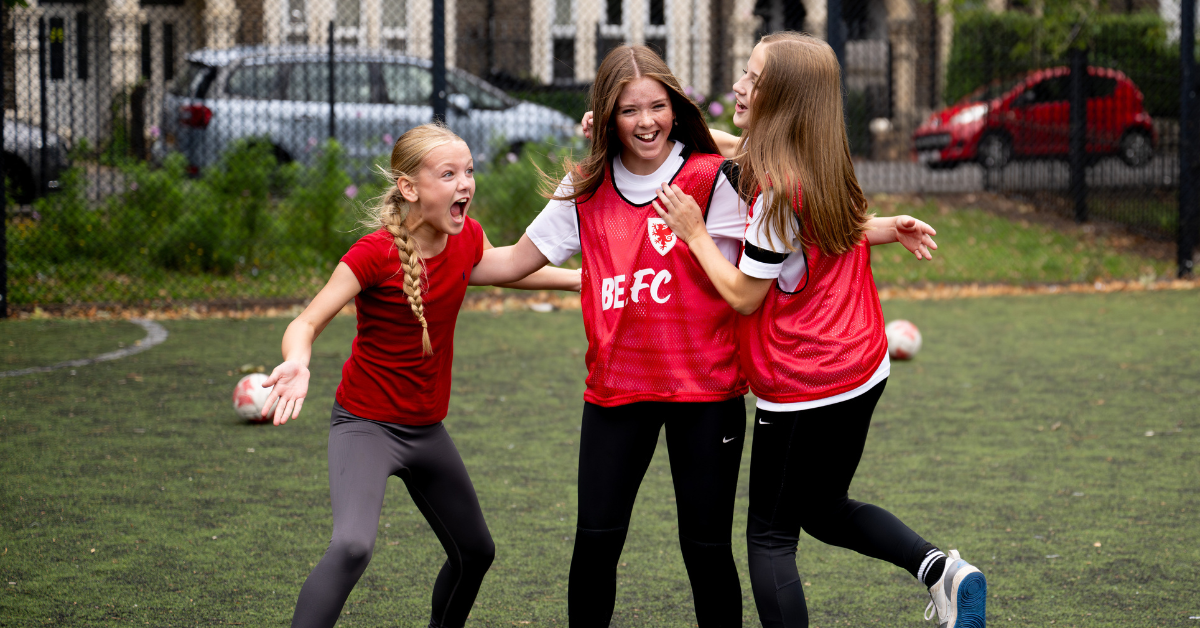
We spoke to Ellie Lake, Participation Officer at the Football Association of Wales (FAW) and Swansea City star, about how participation is growing and football is becoming more accessible across Wales. Here, Ellie shares her thoughts on the role football can play in supporting health and wellbeing, the importance of lifelong opportunities to stay involved in the game, and how collaboration, data and innovation can get more people active.
What does participation in football look like in Wales today, and how has it changed in recent years?
Football participation numbers are rapidly increasing across Wales in all formats of the game. The FAW set out a 5-year Our Wales strategy in 2021 to surpass 120,000 registered players by 2026. This milestone was achieved in May 2026, seeing a 56% increase from where we began in 2021, with 76,000 registered players.
Perhaps the most notable increase has been within the women and girls’ game. Alongside the Our Wales strategy, we launched the Our Wales: For Her strategy, with a target of 20,000 girls playing by 2026. I’m so happy to say this was actually surpassed last year during the Women’s Euros, when Wales debuted on the international stage at the first major tournament.
We have also seen major growth across other areas of the game. Recreational formats like walking football and veterans’ football have made huge strides, as has Disability Football, with numbers increasing from a mere 173 players to 7,500+ players in this space.
As we enter a new 10-year strategy, the next goal is 160,000 registered players. Alongside bringing in new players, we have a big focus on retention of players and volunteers, while ensuring the right off-field governance and support is in place too.
But it hasn’t all been ups, with dips in participation across some age groups. The teenage girls’ space is one we are finding particularly challenging to navigate, with some declines in the U14–U16 age groups. This is being addressed through FAW-specific participation programmes, most notably the BE.FC programme, which looks to combat this and provide more opportunities for girls to stay involved in football. FAW affiliate partners such as Game On also do huge work in supporting us to deliver in this space.
The future is looking bright across all formats of football currently!
The physical benefits of being active are widely known, but what role can taking part in activity have in supporting people’s wider health and wellbeing?
Across Wales, we have lots of different formats of football. One new format that has been delivered this year is Parkinson’s football. At the FAW, we teamed up with with area associations and the charity Sport Parkinson’s to provide £13,000 of funding to eight different providers to deliver Parkinson’s football across Wales.
This targeted funding has allowed clubs such as Haverfordwest to create bespoke sessions for people with Parkinson’s. At Haverfordwest, the sessions have continued to grow, with one player who initially just came along to watch her husband now joining in herself. They both feel able to take part in a great social session whilst keeping active, which is a great example of how football can provide opportunities for people to stay active, connected and involved.
How is the FAW working to make football more accessible and inclusive for people who might traditionally face barriers to taking part?
As I mentioned, the FAW offers multiple different formats of the game to cater for the needs of all. Alongside these different formats, there is also a participation pathway that offers entry and re-entry points into the game. These programmes allow non-competitive football to be enjoyed by all, creating more accessible opportunities for people to get involved, whatever their experience or ability.
We are also looking to develop the participation pathway further, as there are currently some gaps within it. There is a need for more adult recreational opportunities, as well as further development within the boys’ pathway. In comparison, the female pathway is much more developed, currently providing opportunities through to adulthood. Developing these areas further will help us make sure there are clear entry and re-entry points for everyone, whatever their age or gender.
Off-field education for volunteers is also at the forefront of the courses we deliver, making sure sessions and club environments are as inclusive as possible. This includes advice around inclusive facilities, tailored sessions and creating more inclusive club structures.
There is still much more work to do when it comes to engaging minority groups, although there are some great examples of work already taking place in Swansea. A women’s football and netball project is currently being delivered at Swansea Mosque, with over 65 women now engaging with the project. This demonstrates the power of bringing opportunities directly into communities, rather than simply signposting people to existing provision.

How important is it to give people opportunities to stay involved in football throughout different stages of their lives, rather than stopping after childhood?
Being involved in football is so much more than just playing. There are many opportunities to volunteer in football and become part of the social and community feeling that comes with being involved in a club. We encourage everyone to get involved with their local club, as often they are the heartbeat of the local community.
It is so important to offer a variety of different football opportunities for all, so that people can get their football fix no matter their age. Being active later in life has been shown to improve cardiovascular health and reduce blood pressure, alongside the wider social benefits that come from being part of a team and community.
Grassroots football is worth £553 million to Wales, including £206 million in healthcare savings and almost £84 million in economic impact from social benefits. This is huge for us as a nation and highlights the wider value that football can bring beyond the pitch.
We are striving to complete our participation pathway so that opportunities to play football and be involved in football are available throughout life, ensuring that people can stay connected to the game in whatever way works for them.
What role do you see tech, data and innovation playing in increasing participation and helping people get more from being active?
Technology in sport is huge now. Everyone has a smartwatch that can track different metrics, social media gives people access to coaching ideas and workouts to try, and platforms like Strava allow people to track their activity and connect with others. Technology has the power to lower barriers and make participation more accessible.
Tech is also key to the FAW in tracking participation figures, ensuring compliance across clubs and identifying data trends. This can help inform new initiatives and programmes, ensuring we respond to where participation is dropping off and looking at ways to re-engage people. We also use digital platforms to help people find sessions that are suitable for their age, ability, location and interests, making it easier for someone to find an opportunity to get involved. This is particularly important within recreational football, where people may not want the commitment of a traditional club or competitive league.
The innovation of using different formats of the game is also huge moving forward. As we see the recreational space continue to grow, with walking football, 5-a-side turn-up-and-play and futsal all on the rise, participation is growing across the game and giving people more choice around how they want to engage with football.
There is also an opportunity to use data to demonstrate the wider impact of participation. If we can better capture how many people are playing, as well as the physical, social and wellbeing benefits they are gaining, we can build a much stronger case for investment in grassroots football across Wales.
What are your goals for football participation in Wales over the next few years?
Our biggest goal is to grow participation while keeping people in the game for longer. The new FAW strategy (2026-2036) sets a clear ambition to grow from 120,000 to 160,000 registered players, while reducing the number of 12–17-year-olds leaving the game by 50%.
To achieve this, we need to provide more choice and flexibility – different formats, more recreational opportunities and clear pathways for people to enter, leave and re-enter football throughout their lives. We also need to invest in the people, clubs and facilities that make participation possible, with an ambition for quality football facilities within 15 minutes of every community in Wales.
Ultimately, it is about creating “One Game. Many Pathways. Lifelong Opportunities.” and making sure there is a place for everyone in Welsh football.

What opportunities do sports, healthcare, academia and industry have to work together to encourage more people in Wales to be active?
There are lots of opportunities to work together across the sector in Wales, but we do not always utilise these opportunities as effectively as we could.
Organisations such as WIPAHS bring together National Governing Bodies (NGBs), educational institutions and Sport Wales to help create a healthier society, using research and insight to drive positive change through sport. At FAW, this is an area where we could engage more and make better use of the expertise and research available.
We do, however, engage regularly with Sport Wales, Welsh Government and the public health sector to ensure we are aligned on strategic priorities and working together to drive change. Welsh Government supports the FAW to invest around £9 million each year into grassroots football, helping to improve facilities and increase opportunities to participate across Wales. This investment can also benefit other sports, with recent shared 3G developments for football and rugby in places such as Llandovery.
There are also strong examples of health and sport working together. Public health and NERS teams work with us to create referral pathways into programmes such as Parkinson’s football and walking football, helping people move from health services into accessible opportunities to be active.
Across the wider sector, there is a real opportunity to strengthen these partnerships further. We should make better use of the expertise, research, data and networks that already exist across Wales, while creating more opportunities to share learning and tackle inactivity collectively. This could mean greater collaboration with projects like NISH to access academia to understand what works, industry for innovation and technology, and health partners to create more pathways into activity. By bringing organisations together around shared priorities, we can make better use of the resources available and ultimately reach more people who are currently inactive.