
The Diabetes Research Group at Swansea University has developed extensive experience in assays related to diabetes over many years, supported by a laboratory accredited to the Good Clinical and Laboratory Practice Standard.
This expertise has led to collaborations with pharmaceutical, medical device and diagnostic companies, including a long-term relationship with Invitron, a small company based in Monmouth specialising in developing highly sensitive assays.
Together, Swansea University and Invitron have secured Innovate UK funding to develop a near-patient test for C-peptide, a small protein that is co-secreted with insulin from the pancreas and is of interest in diabetes research and care. Demand for C-peptide testing is expected to increase as new therapies for the prevention of type 1 diabetes are developed.
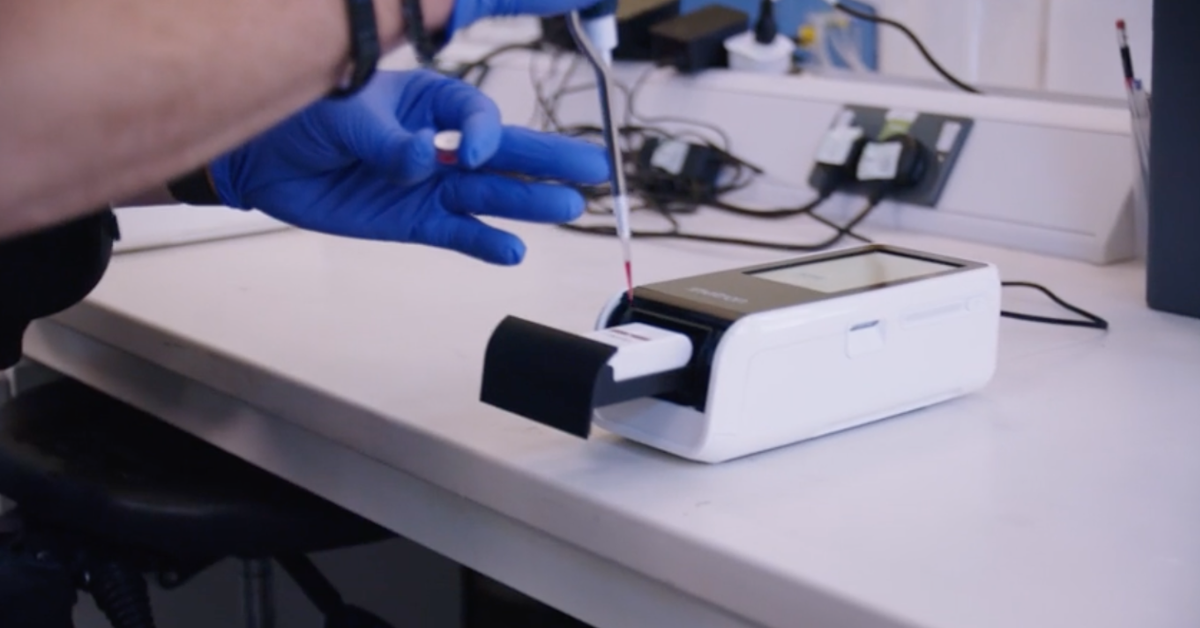
Currently, measuring C-peptide requires a blood sample to be sent to a laboratory for analysis, with results taking up to several days. The collaboration is developing a portable device that can use a finger-prick blood sample and provide a result in approximately 10 minutes.
As part of the project, Professor Steve Luzio‘s team has been testing the accuracy of the device. The results so far have been encouraging enough for the team to progress to a clinical trial involving approximately 70 participants at Swansea University’s Joint Clinical Research Facility.
The collaboration with Invitron is helping to develop a C-peptide test that requires only a small blood sample and can provide results much more quickly than the current approach.
The work could also support the development of future treatments for diabetes, as C-peptide testing is expected to become increasingly relevant alongside new approaches to preventing type 1 diabetes.