
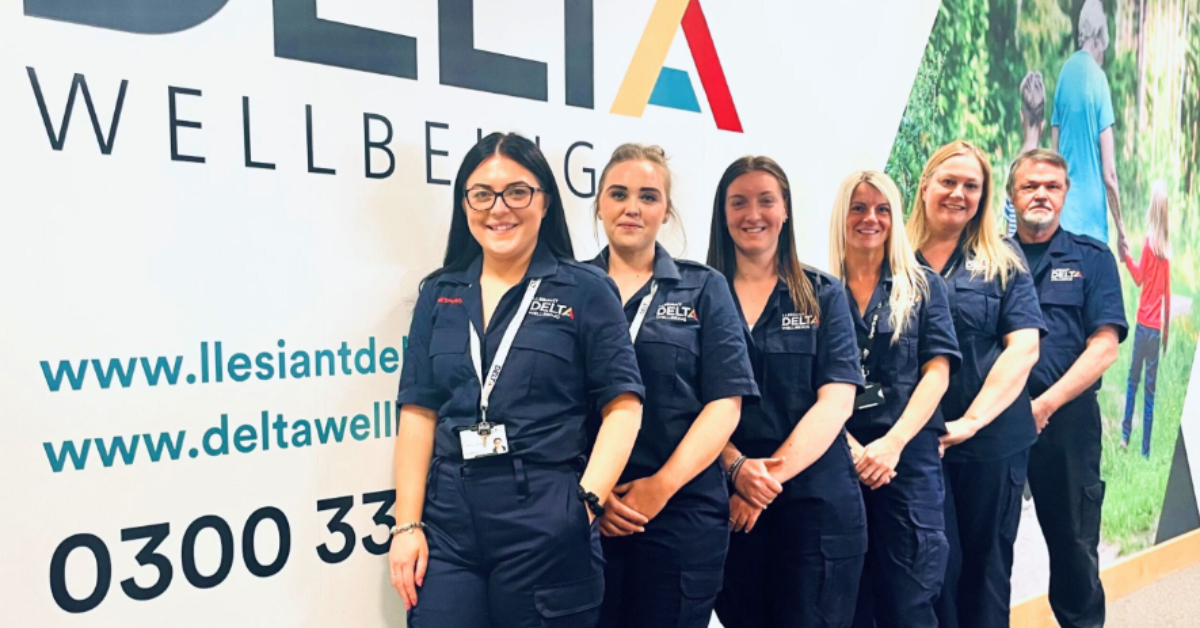
Delta Wellbeing’s CONNECT and Blue Army services are enhancing home care, reducing hospital readmissions, and fostering innovation through collaboration with Network member the Healthcare Technology Centre (HTC).
With over 11 million people aged 65 and over in England and Wales in 2021, and a projected 16% increase in Wales by 2030, the demand for health and social care continues to rise. Traditionally, the organisation and provision of care for vulnerable older adults have faced significant delays. Delta Wellbeing is pioneering innovation in home care delivery across South West Wales, offering tailored services that ensure comprehensive support for vulnerable populations through its CONNECT and Blue Army services.
In collaboration with HTC, Delta Wellbeing aimed to evaluate its services, with a specific focus on the CONNECT Falls Response initiative and Blue Army service. These initiatives facilitate early hospital discharge, prevent readmissions, and provide robust community-based care. The evaluation sought to assess service effectiveness, identify barriers to innovation, and propose actionable recommendations for improvement and scalability. By engaging with Swansea University’s research team, Delta Wellbeing aimed to optimise workforce deployment strategies, streamline services, and strengthen its position within the healthcare sector.
The project commenced with HTC and Delta Wellbeing securing an Accelerated Knowledge Transfer to Innovate (AKT2I) grant. This initial phase involved developing a structured project plan and timeline. Following the successful grant application, HTC submitted an ethics application to ensure compliance and readiness for the evaluation process.
The HTC research team conducted a multi-faceted assessment of Delta Wellbeing’s care models. An independent analysis of secondary quantitative data, including response times, was carried out to evaluate service effectiveness. Additionally, 17 key stakeholders—including healthcare professionals from Hywel Dda University Health Board, social care workers, and Delta Wellbeing staff—participated in semi-structured interviews. These interviews, conducted both in-person and virtually, provided valuable insights into the successes and challenges of the CONNECT and Blue Army services. A thematic analysis of these discussions highlighted key challenges within the sector, such as bridging information gaps between healthcare providers and social care teams, facilitating hospital discharges, and reducing hospital readmissions.
A comprehensive report was produced and shared with Delta Wellbeing, detailing key findings and stakeholder perceptions regarding the successes of their initiatives, along with opportunities for refinement and expansion. The evaluation allowed Swansea University to develop a data-driven framework that Delta Wellbeing can leverage to refine its services, improve resource allocation, and position itself for future expansion across Wales.
Sarah Vaughan from Delta Wellbeing highlighted the impact of this collaboration, stating, “The collaboration between Swansea University and Llesiant Delta Wellbeing Limited has been a positive opportunity, successfully fostering knowledge transfer. This project has encouraged further learning and highlighted the need for future collaboration. It has demonstrated the effectiveness of teamwork and shared commitment in achieving common goals.”
This collaboration exemplifies how the Network partnerships can drive innovation, improve healthcare delivery, and ensure vulnerable populations receive the high-quality support they need.

