
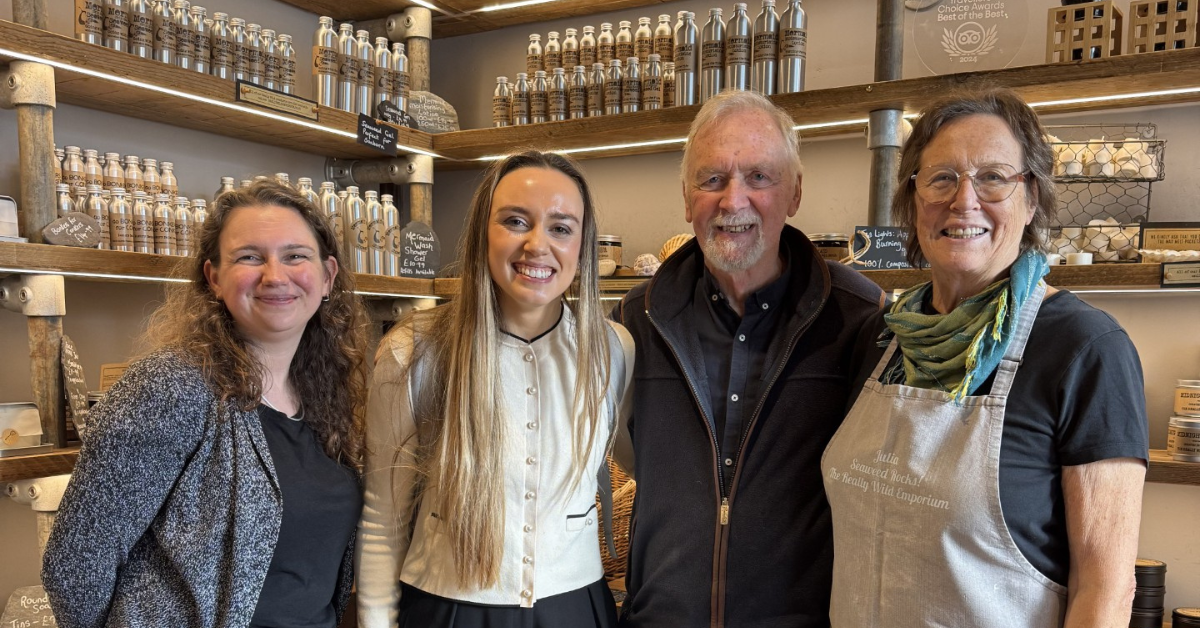
The Really Wild Emporium project explored consumer perceptions, preferences, and trade-offs associated with products containing foraged or wild ingredients. The research aimed to uncover the psychological and social barriers that influence consumer acceptance of these products, as well as opportunities to promote sustainable, health-supporting choices through foraged ingredients.
The first phase involved visual focus groups with 26 participants (16 students and 10 members of the public) from Swansea. The purpose was to explore consumers’ pre-existing associations with foraging, their willingness to use food or personal hygiene products containing foraged ingredients, and the perceived barriers and challenges to adoption.
Findings revealed a limited understanding of foraging, with some participants associating the practice with stigma or embarrassment. Foraging was occasionally perceived as an activity linked to necessity or poverty rather than sustainability or wellness. Participants also highlighted uncertainty around the safety, sourcing, and benefits of wild ingredients.
Another key barrier was the lack of green spaces available. Participants often mentioned that the places they had previously picked ingredients (e.g. in childhood) had been replaced with residential or commercial buildings.
Insights from Study 1 informed the design of a UK-wide survey with 281 participants. The survey examined consumer trade-offs when selecting real products containing foraged ingredients from the Really Wild Emporium, including a moisturising lotion and several meat, fish, and vegetable-based dishes.
Participants evaluated trade-offs between key product attributes such as price, health benefit, ingredient source, and product messaging. Across product categories, consumers showed a stronger preference for items described as “naturally,” “locally,” or “sustainably sourced,” compared to those labelled “foraged,” “wild,” or “hand-picked.”
This project generated new knowledge about consumer perceptions of foraged and wild ingredients – an underexplored area in nutrition, sustainability, and consumer behaviour research. The findings indicate a significant knowledge gap regarding the availability, safety, and nutritional benefits of wild ingredients. Addressing this gap presents opportunities for education and engagement interventions, particularly using visual communication to reframe foraging as a positive, sustainable practice.
The research has also established a foundation for future collaboration with the Really Wild Emporium, including potential development of public health campaigns or educational materials that promote foraged ingredients as part of a sustainable and healthy diet. Given ongoing challenges related to climate change and food insecurity, the responsible promotion of wild and foraged ingredients could play a critical role in supporting both environmental sustainability and public health resilience.
This work aligns closely with the NISH’s mission to advance public understanding of the links between nutrition, wellbeing, and sustainable health practices. By informing future education and outreach initiatives, the project contributes directly to NISH’s goal of fostering evidence-based strategies that enhance population health and environmental responsibility.